Maine, Bugs, and Sunday River
Introduction:
When I look at my spreadsheet, yeah, I have all of my New England covered bridges listed to track them, and my sheet also includes my three- to five-bridge loops mapped out. I believe that for any project, some level of planning is necessary to make it more successful. Sunday through essentially Wednesday, I am all about the photoshoot, the editing, the writing, and then posting.
With the core grunt-work logistics mapped out, I have more time to focus on the actual trip planning, and now that my process for the covered bridges is slowly becoming more dialed in, I need to add a bit more.
For this trip to see three of the historic covered bridges in Maine, I decided to add some stops along the way, and yes, I planned them too. When I am in the thick of it, my goal is to get to the bridge, photograph it, then drive to the next location, rinse, repeat. This time, I was like, no, let's find out what's on this route that could be funny to photograph. If nothing else, it breaks up the trip.
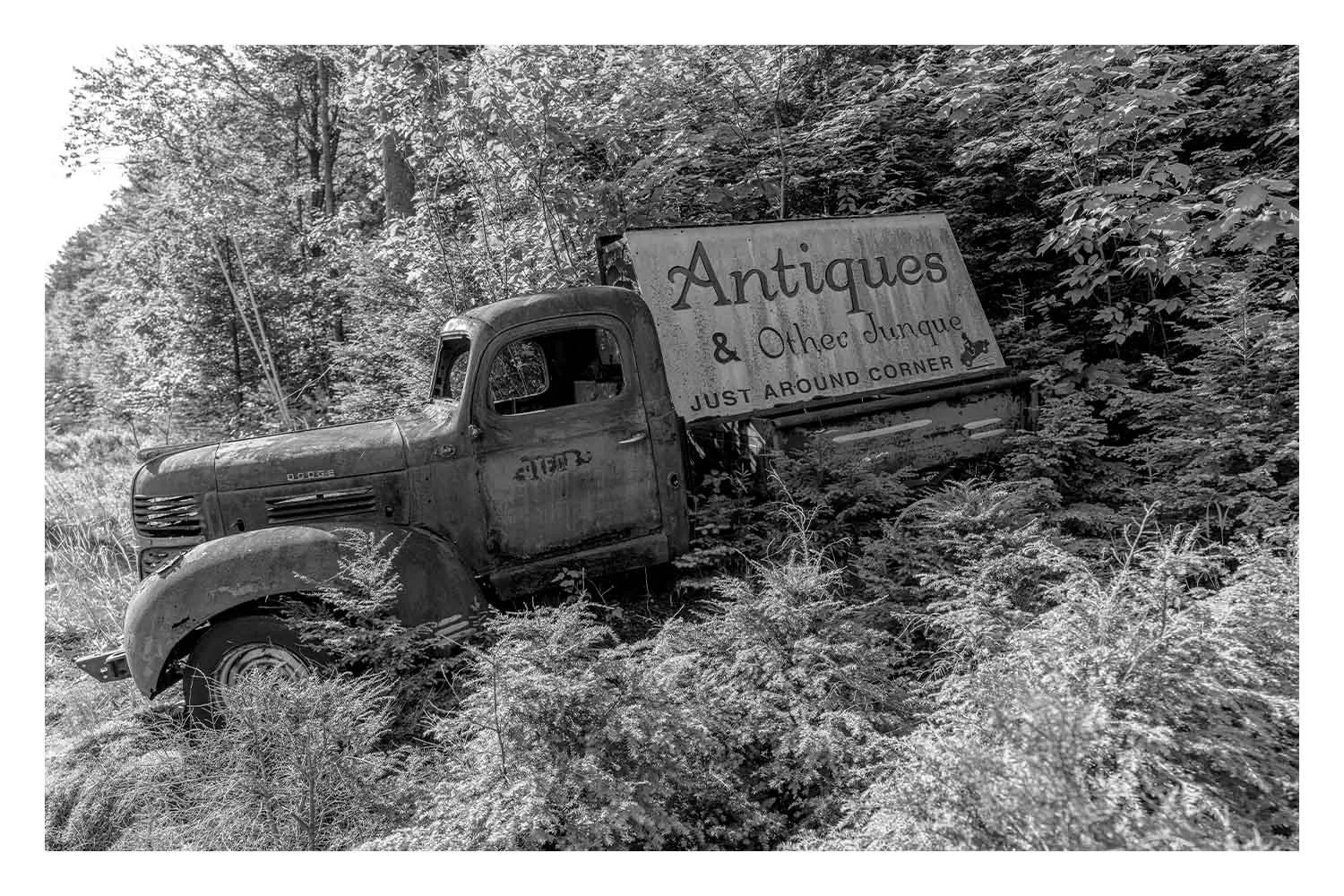
Antiques & Other Junque Truck - Gilead, Maine
Just an old truck advertising a small business up the street.
The Day:
Sunday started like my other photography road trips with a 5 a.m. wake-up, out of the house by 5:30 a.m., and a quick fuel stop near Concord, New Hampshire. I was headed to my first bridge of the day, Sunday River Covered Bridge in Newry, Maine.
About 10 minutes from the first covered bridge, I saw an old pickup just off the side of the road, with an antique and junkque sign in the back that just screamed for me to take a picture of (not an original thought, I am sure). It wasn’t on my itinerary, but a few minutes were spared to grab a shot.
The three-hour ride was uneventful and was the longest stretch of the day. When I got to the bridge by 8 am, I fully expected it to be swarming with fishermen and to have minimal parking left, but instead I had the ancient bridge to myself for a while.
Right off the bat, Sunday River Bridge proved challenging to find a good spot to set up. Since this covered bridge project is also about documenting, not just creating fine art, I try to find several angles from which to photograph, and the Sunday River bridge wasn’t willing to give up its secrets without a bit of meandering.
While wandering around, I came across a concrete fawn lawn ornament, which, of course, caught my eye, so on went the macro lens.
The weirdest part was that after about an hour, people started showing up in groups, with one couple doing what I can only assume was an Instagram photoshoot. They set up camp right where I was, but I’ll bet since I look like a sasquatch on camera, they struggled to keep me out of their shots.
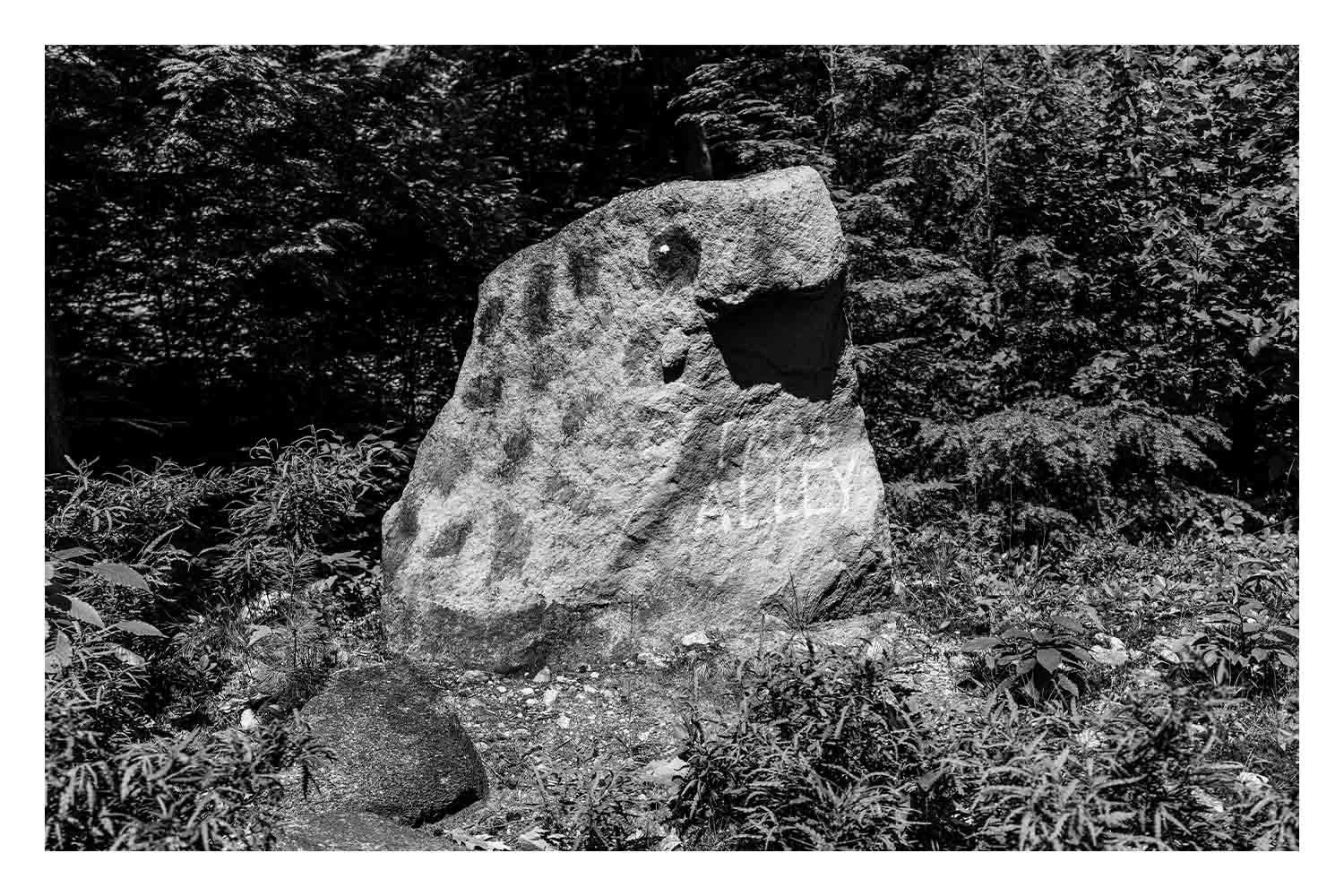
Frog Alley Rock - Fryeburg, Maine
Funny little painted rock sitting on the side of the road.
The next destination was Hemlock Covered Bridge. Along the way, I grabbed a shot of a rock with a painted sign that said “Frog Alley” and the rock painted like a frog, complete with eyes.
Then came Hemlock Bridge, and oh my god, the mosquitoes. The second I stepped out, I was swarmed by the beasts. Apparently, the Red Cross was running low on supplies, and these guys were here to collect.
I have never photographed so fast, but I had my Nikon Z9 dialed in with the tilt-shift lens already mounted. I took three quick photos in maybe 5 minutes, then dove back in the truck. The rest of the day in the truck meant swatting stragglers who decided life in Maine was too much for them.
The final covered bridge of the day was the Parsonsfield-Porter Covered Bridge. There, I had a great chat with a couple who were traveling around photographing covered bridges. After talking shop for a few minutes, they asked if I had been to Hemlock yet. I chuckled and said yes, and that the bugs were insane; they clearly had a similar experience as I did.
This bridge was a bit tricky to shoot as well, which seemed to be the theme of the day, and offered limited angles from which to photograph. I ended with a couple of straight-on shots from both sides of the bridge. The biggest story here was all the graffiti covering the inside of the bridge.
With the day's core photography done, back into the truck to follow another dirt road and make my way back to New Hampshire; however, there were two more stops to make. The first was a railroad turntable in Sanbornville, NH, that was later abandoned and is now surrounded by a park. Fun little stop, and it was great to take a break from driving and stretch the legs.
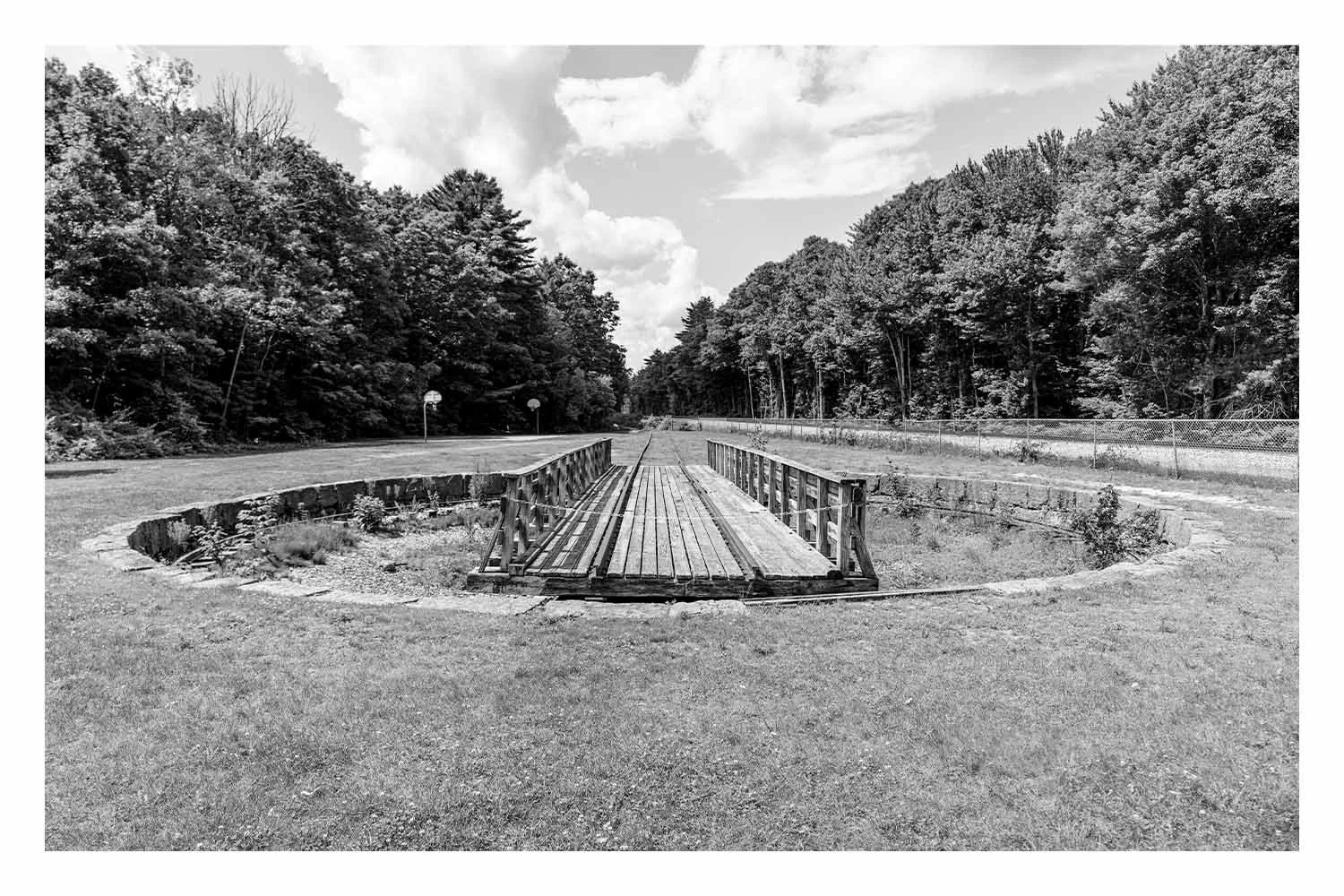
Abandoned Railway Turntable - Sanbornville, NH
Abandoned Railway table, now part of a larger park in town.
The final stop was a revisit to the McAuliffe-Shepard Discovery Center in Concord, New Hampshire, that I hadn’t been to since my daughter was a little kid. I wanted a cheesy picture of the Mercury-Redstone replica rocket out in front of the main building. The shot came out much better than expected, and I think it adds a bit of scale.
With it being 4 pm, it was finally time to make the final hour ride home and wonder how good the photographs really were.
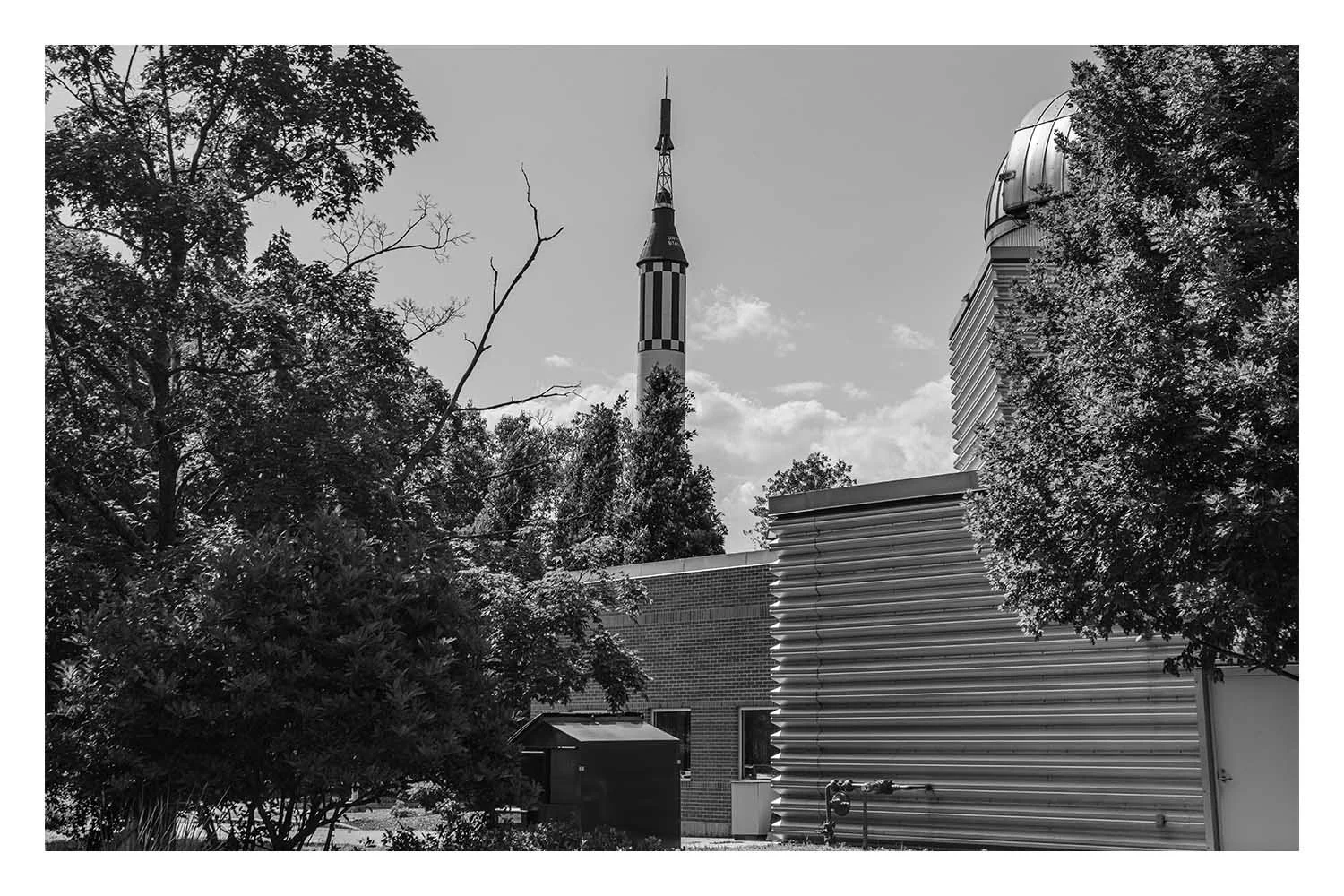
Mercury Redstone Rocket Replica - Concord NH
Replica rocket out in front of the McAuliffe-Shepard Discovery Center.
A Bit of History: Sunday River Covered Bridge
Like anything, there can only be one winner this week, which is all part of my culling process. This week I struggled to find that winner, and with my wife having the final say, Sunday River Covered Bridge was the triptych of the week. Which should be no surprise, I guess, it is reported to be the most photographed bridge in Maine.
Sunday River Covered Bridge: Jackie+David
The bridge is also named “Artists Covered Bridge” and it earned its nickname because John J. Enneking, before he was famous, would spend so much time painting at this location that the name grew from that. One could speculate that it is because of the graffiti, but I digress.
The Sunday River Bridge began its life in 1811 and was unofficially referenced by locals as “The Joel Foster Bridge.” Then, in 1869, an autumn flood washed the bridge away. Because fording the river was difficult, another bridge was built in 1871, but again, in the autumn, it collapsed.
Building bridges is expensive, so they hired Hiram York to build a more stable bridge around 1872 that used the Paddleford truss design. The design worked, and the bridge survived the New England floods of 1927.
Finally, in around 1958, the town built a new bridge, bypassing the original covered bridge. In 1970, it was added to the National Register of Historic Places.